
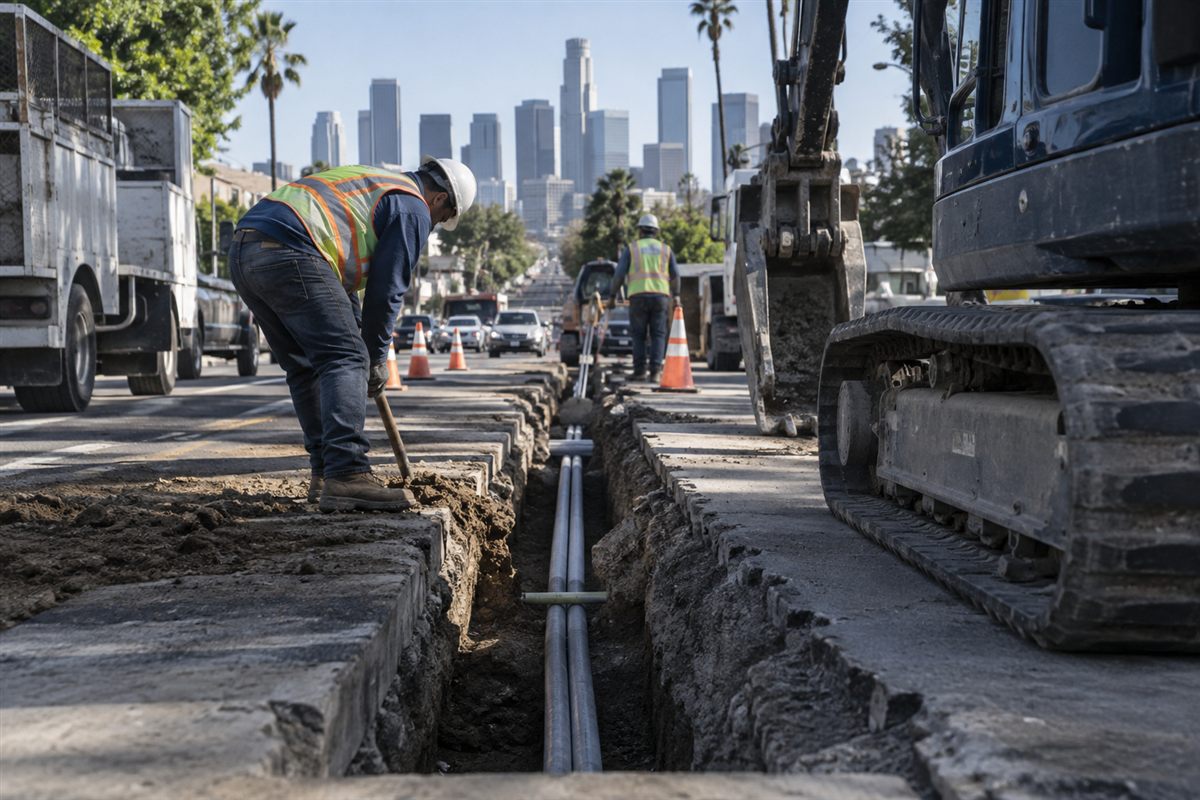
What Is an Excavation U-Permit in Los Angeles?
Start with BOE’s definition, the public right-of-way, and the entities described in the manual.
Read articleSource-based permit intelligence
A focused resource center for understanding the official U-Permit context—without turning conditional guidance into an automated determination.
Source-based articles
Six focused guides explain the BOE definitions, categories, and exceptions without treating general guidance as a project-specific determination.
Start with BOE’s definition, the public right-of-way, and the entities described in the manual.
Read article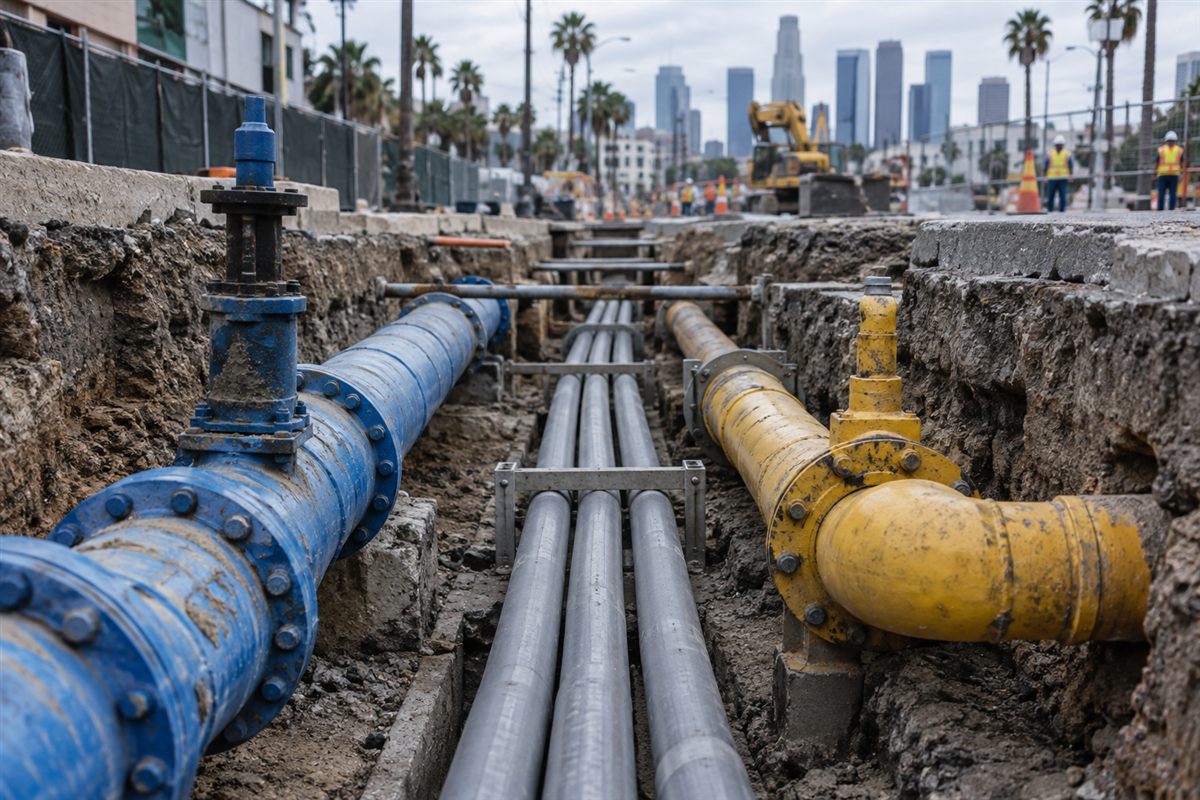
How BOE describes water, power, gas, and certain unstable substances.
Read article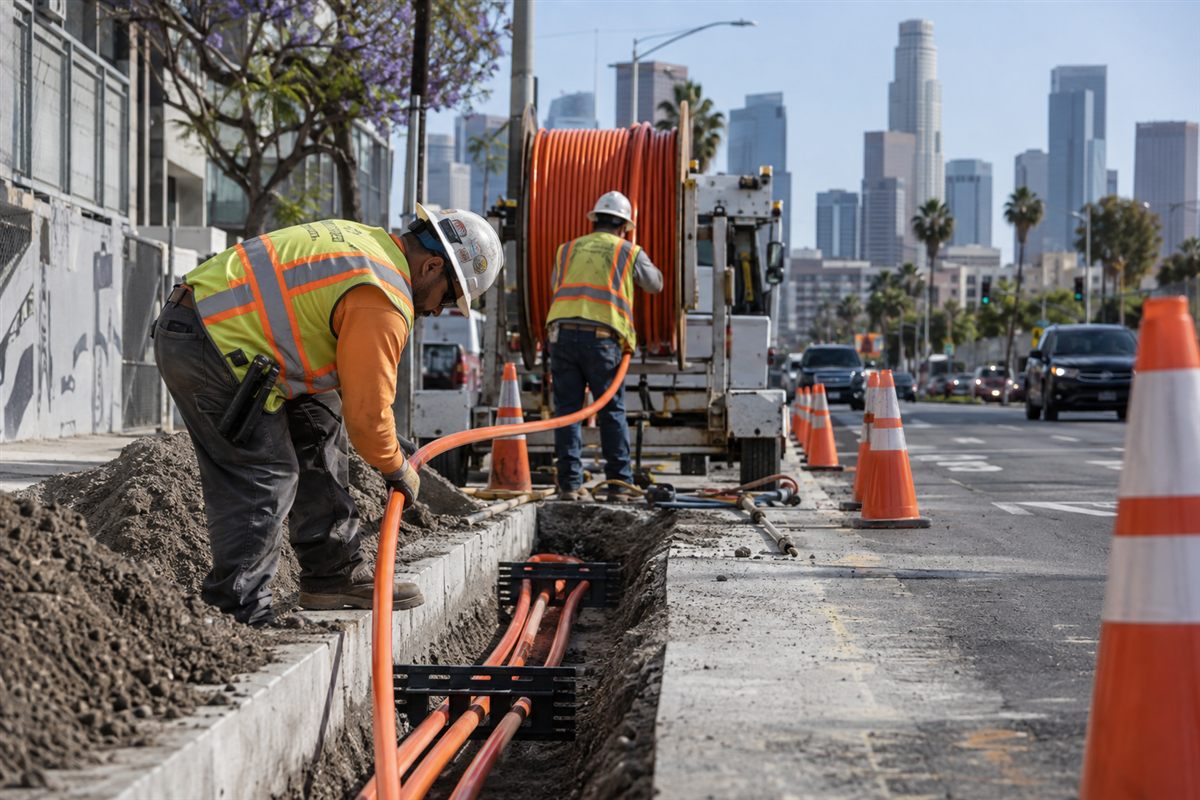
BOE’s dry-utility examples and how its manual describes AGF applications.
Read article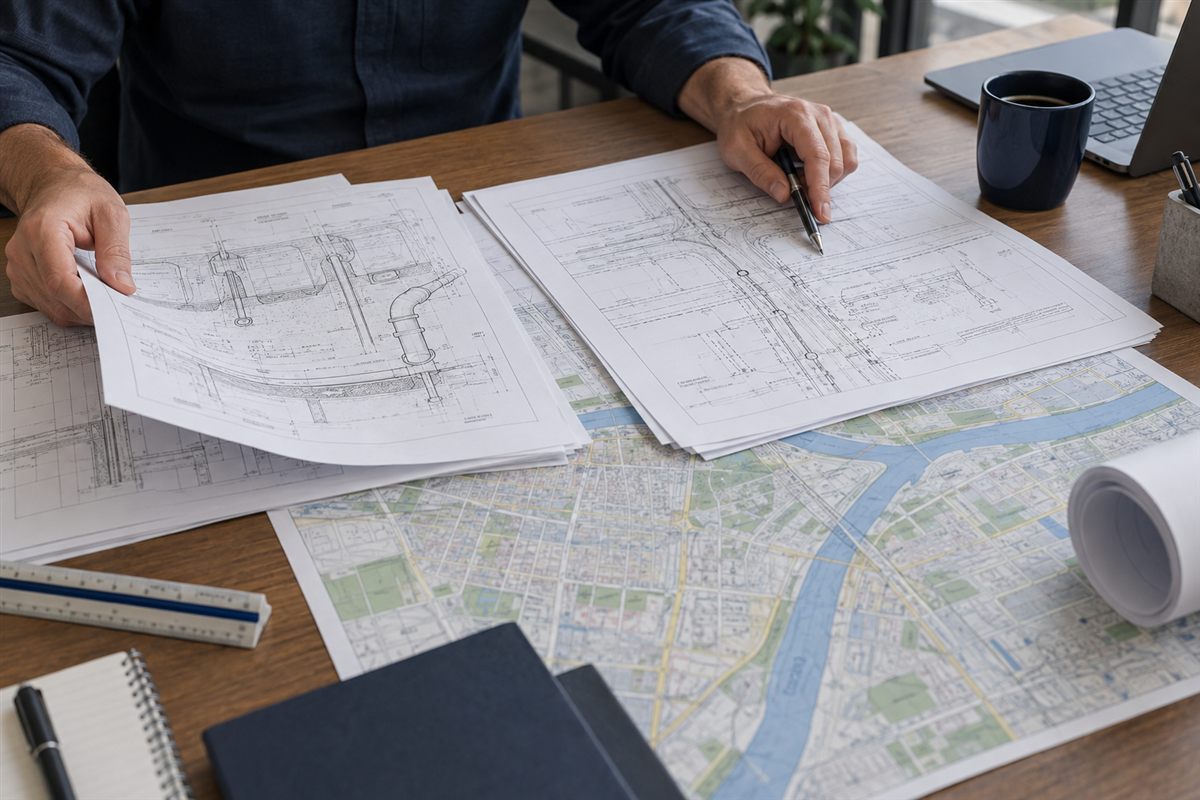
Compare the public-utility context with private construction and infrequent utility installations.
Read article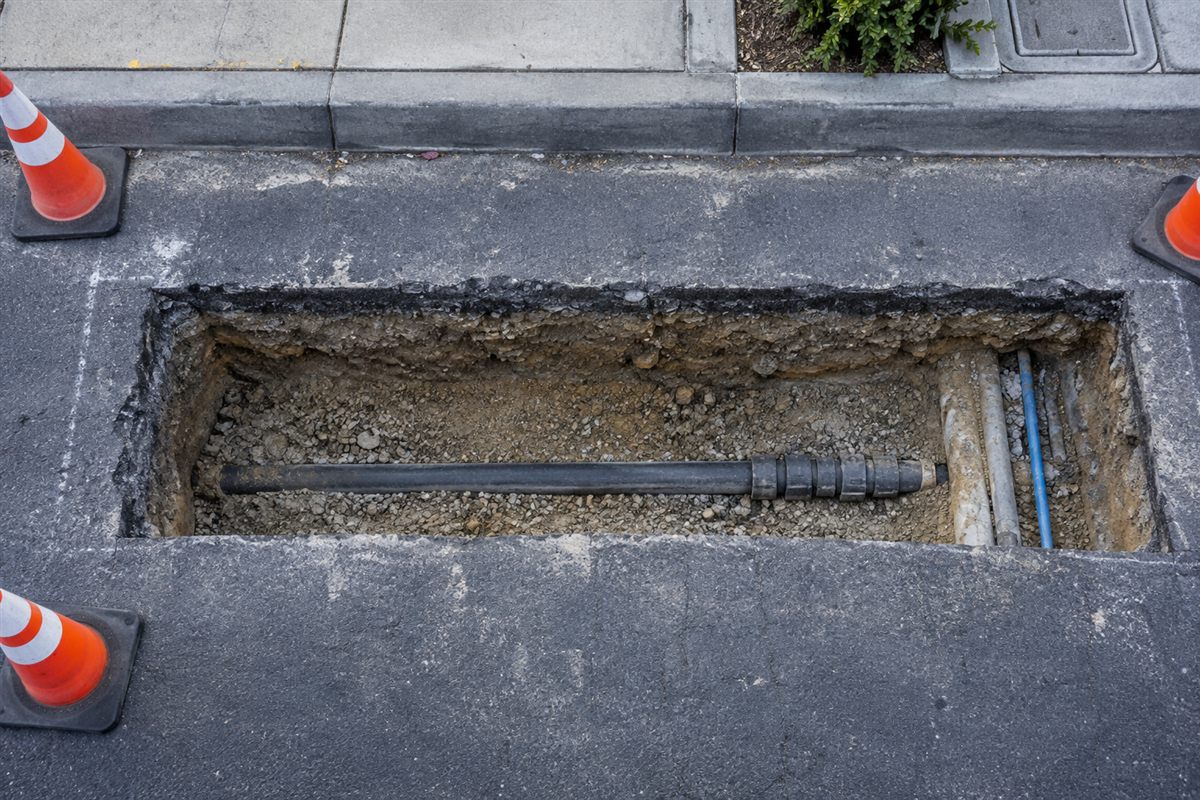
The three square-foot ranges in the BOE manual—and what those labels do not decide.
Read article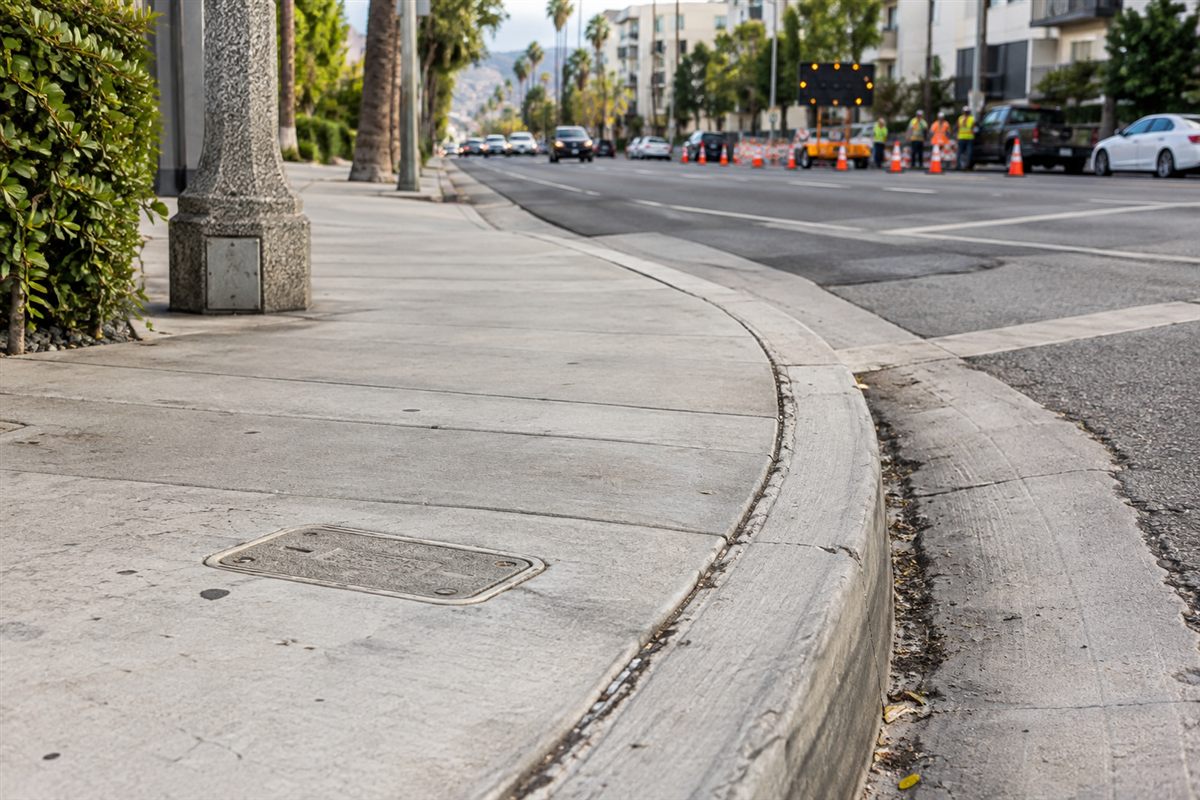
Read BOE’s conditional exclusions without turning them into blanket exemptions.
Read articleGuide 01 · U-Permit basics
According to the Los Angeles Bureau of Engineering, Excavation “U” Permits are issued to public utilities and telecommunication companies regulated by the Public Utilities Commission of the State of California to install public utilities in the public right-of-way under the applicable LAMC provisions identified by BOE.
The BOE general-conditions page further states that U-Permits are issued to entities with authority to occupy the public right-of-way under a City or State Franchise Agreement, a Certificate of Public Convenience and Necessity from the State Public Utilities Commission, or other legal authority. In general, it says U-Permits are issued to utility and telecommunication companies only.
This describes a specialized permit context. It does not mean every utility project needs a U-Permit or that any person can apply.
Review the current official BOE definitionUtility categories
BOE examples include water, power, gas, and certain unstable substances defined by LAMC 62.00. The source includes examples of unstable substances; project classification should remain tied to the official requirements.
BOE includes phone, video, internet, and data transmission cables, describing these as primarily low-voltage wire, cable, or fiber communications network companies.
Location matters
The official purpose statement addresses installation of public utilities in the public right-of-way. It should not be read as a general rule for work anywhere in Los Angeles.
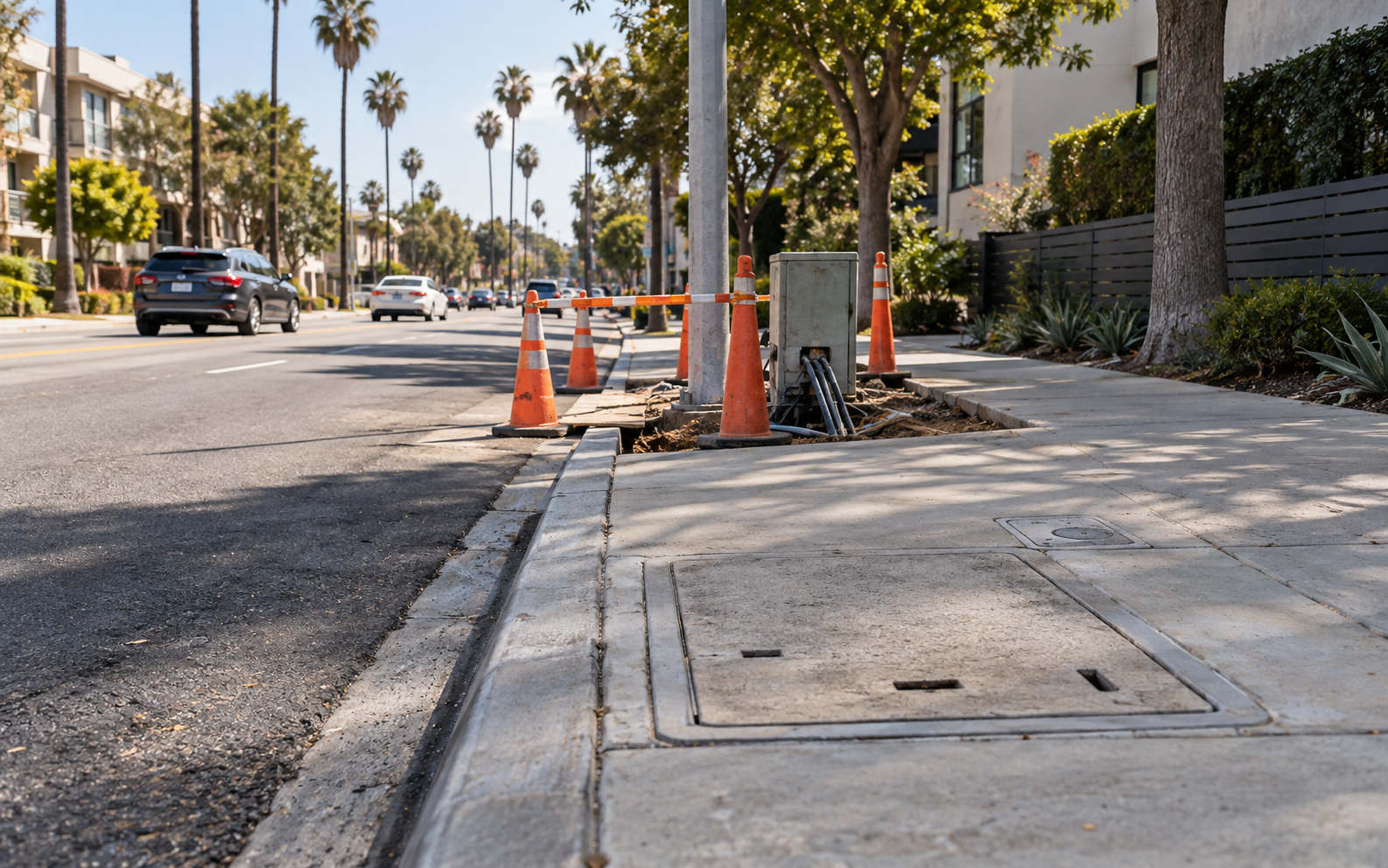
Certain work on private property that is not in an easement dedicated to the City of Los Angeles is among the situations BOE lists where a U-Permit is not required. Work within Caltrans right-of-way is also listed as exempt from the City U-Permit context.
Location, authority, and work scope should be checked against current official requirements.
Guide 02 · Classification
BOE describes two permit types for excavations in or under the surface of a public street or public place.
Excavation U-Permit
Issued to public utilities regulated by the Public Utilities Commission of the State of California.
Excavation E-Permit
Generally used for private construction such as footings, basements, building excavations, tunnels, and pipelines crossing streets, or by utility companies making infrequent installations. BOE states these permits typically require a cash or surety bond.
General orientation only. Review current BOE classification guidance rather than using this comparison as an automated permit determination.
Above Ground Facilities
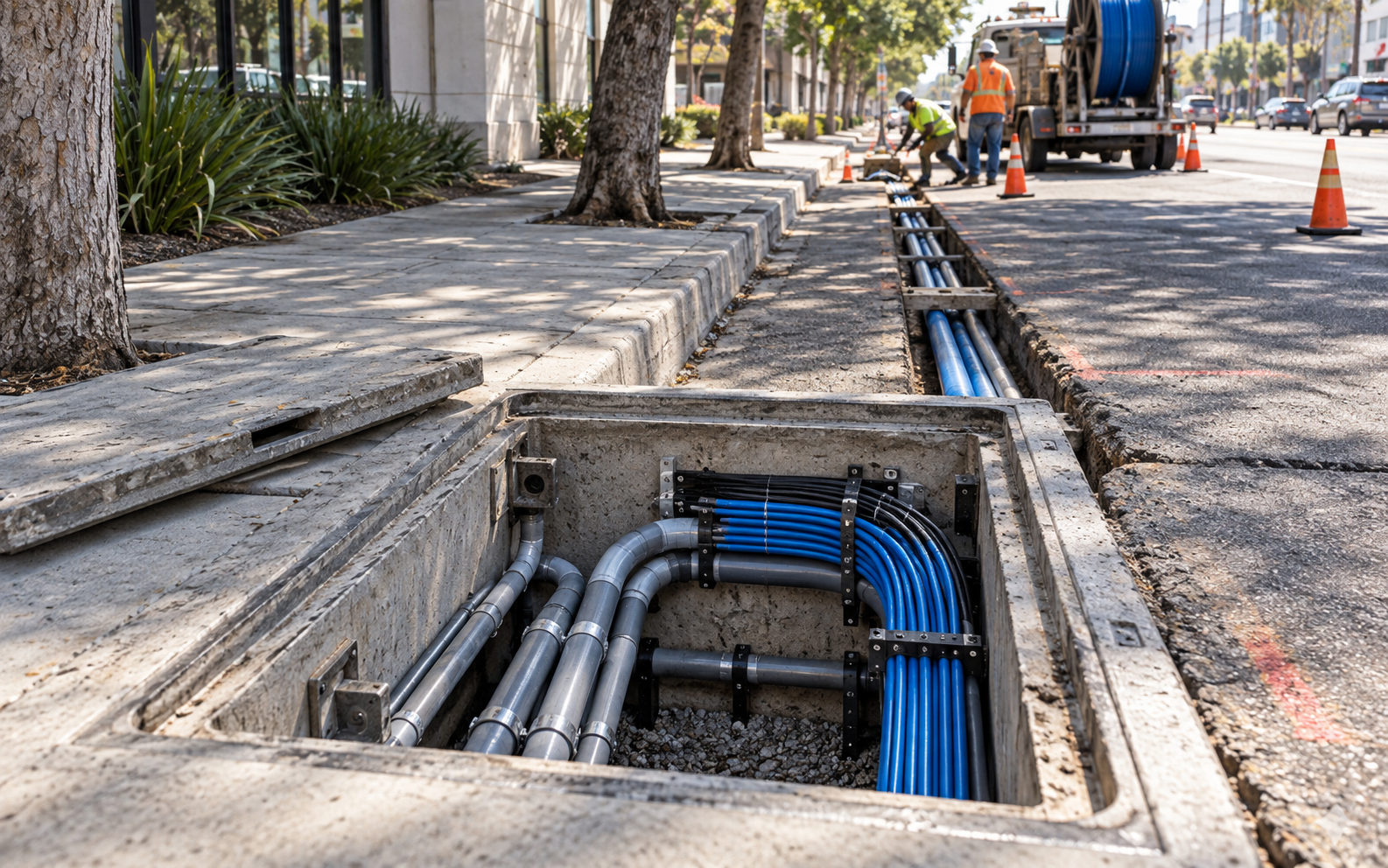
BOE describes Above Ground Facility applications as utility or telecommunication applications that accompany an Excavation U or Excavation E and Revocable permits with above-ground components.
The official source says the specifications and procedures are described by LAMC 62.08, and that AGFs generally require supplemental power permits to power the facilities. It states those are permitted under the Excavation U-Permit once the AGF application is approved.
Verify the current AGF guidanceConditional exclusions
The official source identifies specific circumstances. Several are conditional, so the wording should not be reduced to absolute rules.
Information should be verified against current City of Los Angeles Bureau of Engineering requirements.
Guide 03 · Preparation
A concise fact set makes the initial conversation more useful without presuming which permit will apply.
Primary source
“1 - Excavation ‘U’ Permit – Purpose and Definition,” revised May 11, 2026. Always review the live source for current requirements.
Move from reading to context
Share the project facts for an independent, source-conscious conversation.