
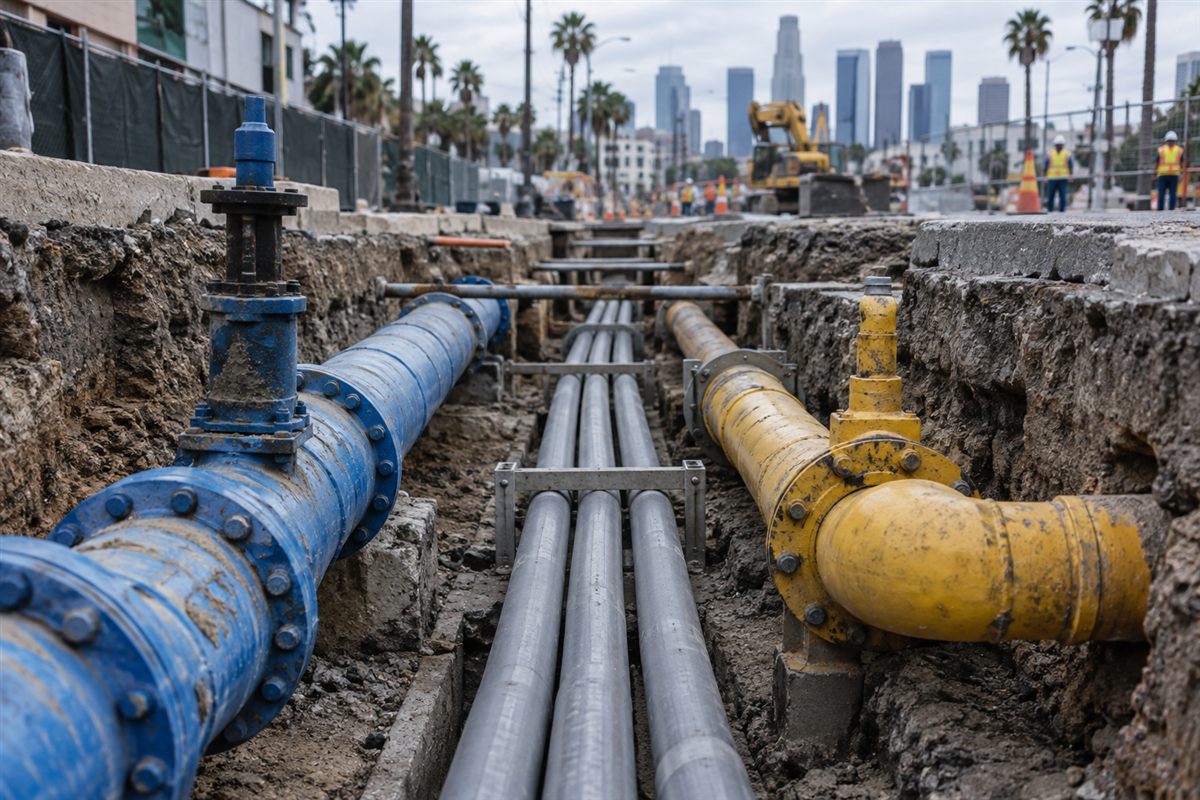
Examples named by BOE
The BOE manual lists water, power, and gas as examples of traditional or wet utilities. It also identifies certain unstable substances, referring to the definition in Los Angeles Municipal Code Section 62.00. The manual gives examples of those substances, including petroleum distillates, butane, propane, oxygen, chlorine, steam, and certain other materials.
Those examples describe the utility category in BOE’s source material. They should not be read as a blanket statement that every project involving water, power, or gas needs a U-Permit. BOE’s core purpose statement also concerns the entity installing a public utility and the public right-of-way location.
Category is only one part of classification
A project team may know the utility type before it knows the correct permit path. The manual’s distinction between Excavation U and Excavation E shows why the nature of the applicant and work matters. Infrequent installations by utility companies, for example, appear in BOE’s description of E-Permit use.
Before relying on a category label, document the proposed installation, its location, the applicant’s authority, and whether excavation is involved. Then compare the complete fact pattern with the current BOE requirements.
A practical way to use this information
Use the utility examples to describe a project accurately when speaking with a permitting specialist or the responsible City office. Identify whether the work is in the street, sidewalk, or another location, and distinguish public utility installation from adjacent private construction. If more than one type of work is involved, avoid assuming one permit label covers the entire scope.
For the legal definitions and current classification guidance, read the live BOE Permits Manual rather than relying on a summary alone.
Information should be verified against current City of Los Angeles Bureau of Engineering requirements. This guide is informational and is not a permit determination.